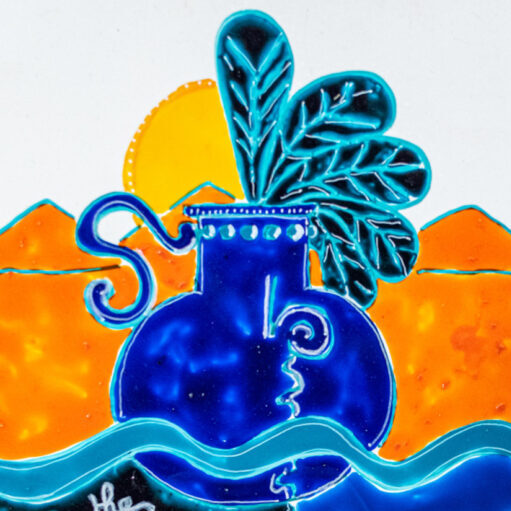
Memory Jars
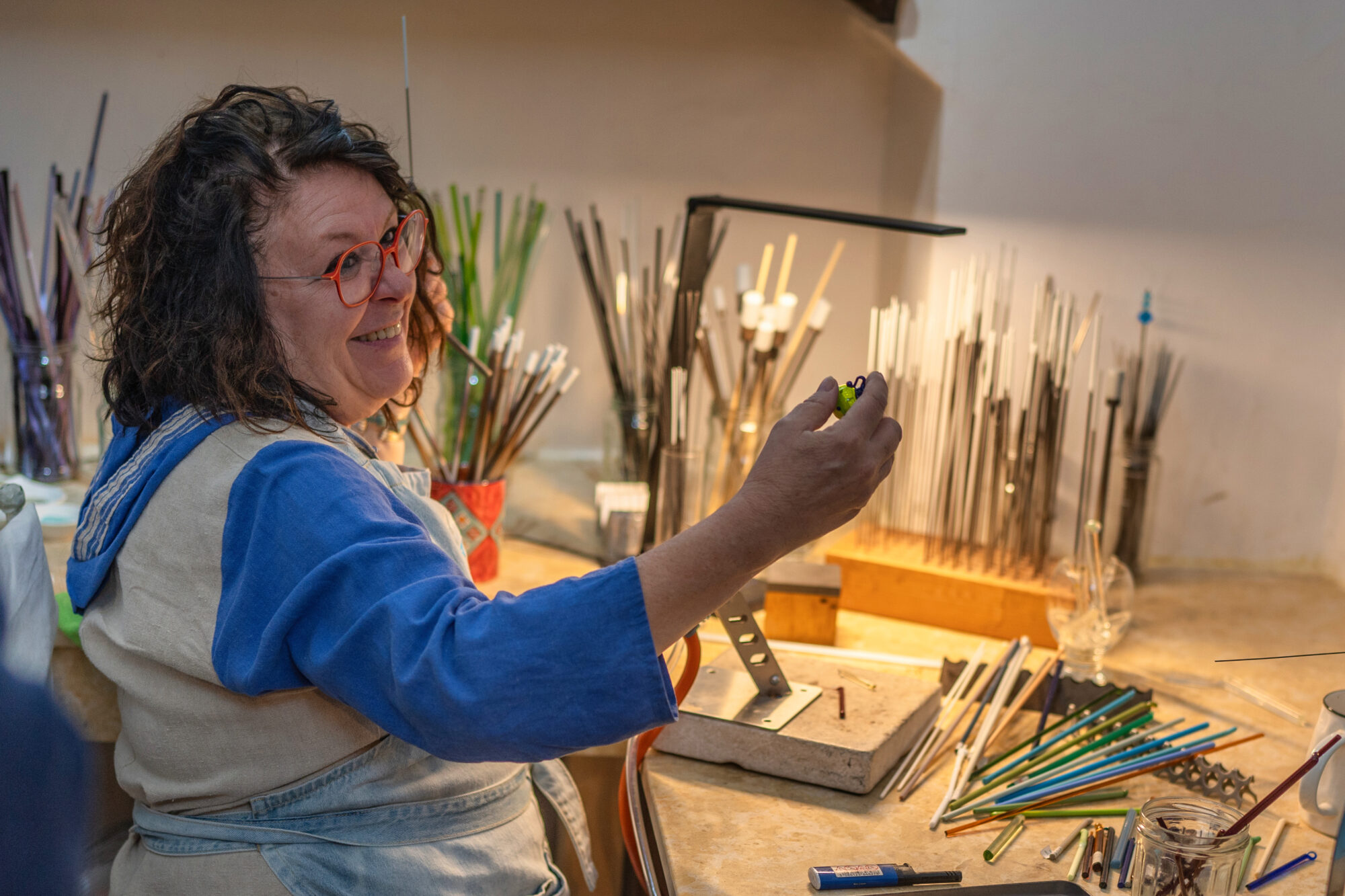
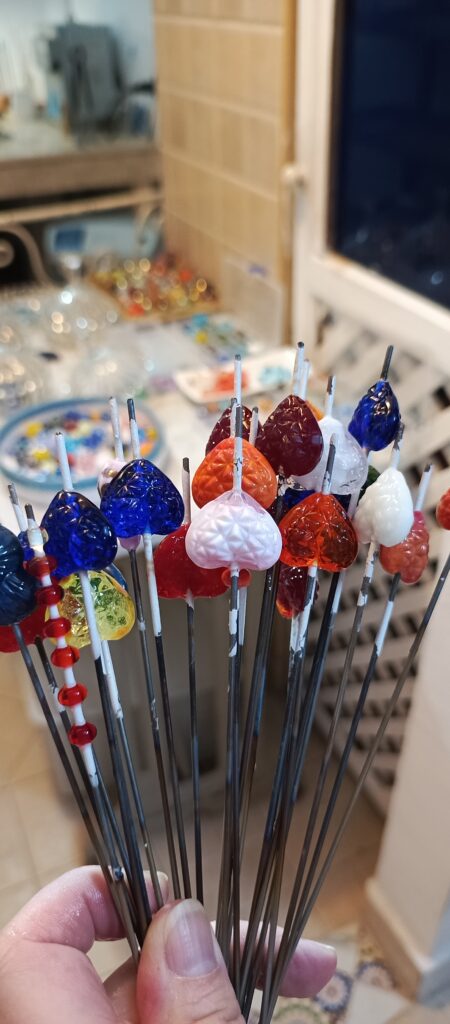
In the riad, you will find a small workshop for glass art on the ground floor. Eva creates glass jewelry, glass objects, and keepsakes from your stay in Marrakech and Morocco.

© Eva Tiefenbacher
“Let yourself be quietly pulled by the magnetism of what you truly love. It will not lead you astray” (Rumi)
The Riad Namssaouia is, among other things, a place of various art forms. Painting, music, clay, and also glass.
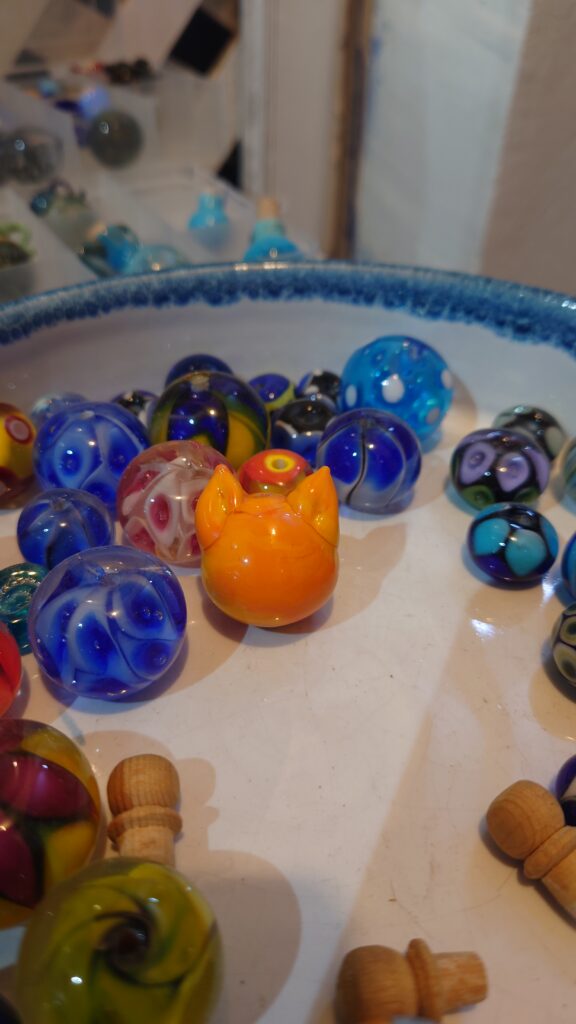
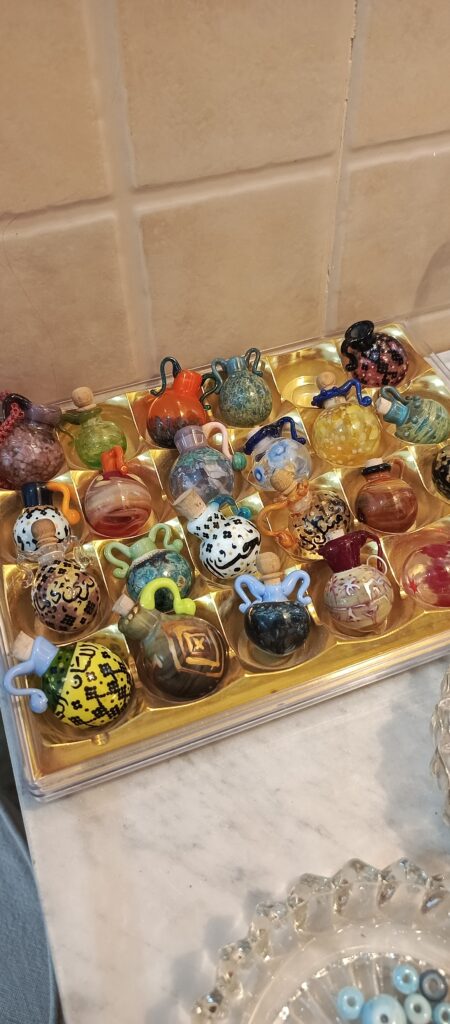
© Eva Tiefenbacher
For more than 10 years, I have been learning to work with the material glass, and you can find some techniques here in the glass studio on the ground floor of Riad Namssaouia.
I source glass from Italy… Murano glass is world-famous, and the history of the island near Venice is worth a page of its own. But Germany also produces glass in the Thuringian Forest, and Czech lead glass is famous as well.
I am mainly fascinated by the colors of glass; it is a joy for my eyes, and the challenges of learning a specific technique have already led me to many wonderful artists and places in this world. Every glassblower is an artist in their own right and has worked hard to create something special with their techniques. Although a workshop makes learning a technique easier, patience and one’s own creativity are indispensable.
The philosopher and mystic Rumi from the 13th century describes the process of art and life with art like this…. “There is a life force within your soul. Seek this life. In the mountain of your body lies a jewel. Seek this. Oh traveler, when you seek it, do not look outside, but look within and seek that.”
MATERIAL
The main component of glass is 60% quartz sand, which occurs in virtually unlimited quantities. Other raw materials include lime and dolomite as stabilizers making up 20%. Soda and sulfate, which serve as fluxes that accelerate the melting process, account for the remaining 20%. The colors are achieved with metal oxides, e.g. cobalt oxide for BLUE, chromium oxide for YELLOW, copper oxide for BLUE-GREEN… The variety of colors is one of the wonders and a high art of the mixtures of this material. – By the way, the color RED is the most expensive color, as it only appears with a proportion of gold oxide.
Glass was not invented by a single person, but its production has developed over thousands of years. The earliest finds of glass objects come from ancient Egypt and Mesopotamia, around 3,500 BC, and were probably discovered accidentally during the production of ceramics or glazes. The Romans then improved glass production and began using glass for windows.
We know three types of glass: soda-lime glass, which we use in Europe and America, also known as “soft glass.” We know lead glass from our grandparents for cut wine and champagne glasses. Japan also uses this glass for its own historically famous glass art. Don’t miss visiting a glass museum when you travel to Japan. It is softer than soda-lime glass and has different properties in the melting and processing area. Borosilicate glass is the hardest and most temperature-resistant glass, requiring more heat during the melting process. Almost all of us use cooking vessels made from this type of glass in the kitchen. It is heavier than other types of glass and cannot be easily recycled.